Santiago Embroidery Font: An Honest Review from the Hoop
When a new machine embroidery design lands in my inbox from Creative Fabrica, I always take a careful look before committing thread and stabilizer. The Santiago Embroidery Font caught my attention immediately with its elegant letterforms, and I knew I had to test it for real project use. After stitching out several samples and running it through a few customer orders, I want to share my experience as an embroidery designer who relies on quality design assets for handmade products.
First Impressions and Visual Mood
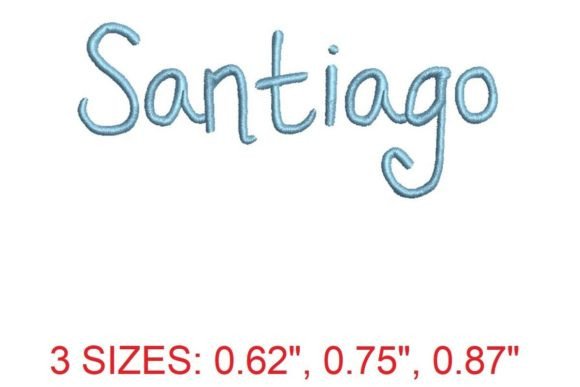
Unpacking the Santiago Embroidery Font file, the first thing that struck me was its balanced sophistication. The letterforms carry a graceful, slightly ornamental feel without crossing into fussy territory. This is not a chunky block font meant for bold signage, nor is it a delicate script that demands near-perfect tension. Santiago sits somewhere in the middle, offering enough decorative appeal to elevate a personalized gift while remaining legible enough for practical items like kitchen towels or tote bags.
The stitching personality feels warm and approachable, which makes it a natural fit for Back To School projects like custom sweatshirt embroidery or embroidered patch sets for book bags. I could also see it working beautifully on baby blankets and nursery decor, where the elegant lettering brings a handmade heirloom quality without overwhelming the fabric.
Where Santiago Shines in Real Projects
I started testing the Santiago Embroidery Font on a sweatshirt for a local boutique order. The customer wanted a name across the chest in a font that felt refined but not overly formal. Santiago delivered exactly that. The satin stitch elements laid down cleanly, and the overall stitch density felt appropriate for midweight knits once I paired it with a good stabilizer.
From there, I moved to a tote bag design for an Etsy listing. This is where the font really showed its versatility. The letterforms stitched out crisply on cotton canvas, and the decorative details held their shape without puckering. I also tested it on an apron and a pillow cover, and both handled well. The font has enough visual weight to stand alone as a centerpiece design, but it also pairs nicely with simple applique design elements or small motifs.
For custom apparel like caps and patches, Santiago performed admirably. The letterforms curve naturally, and I had no trouble adjusting the file for a cap hoop. The running stitch accents within the design added texture without increasing stitch density to problematic levels. If you are producing commercial embroidery products, this font gives you a reliable option for names, monograms, or short phrases that need to look polished at scale.
Practical Performance Across Different Surfaces
No embroidery font is perfect for every surface, and Santiago has its own sweet spots. On stretchy fabric like jersey knits used for sweatshirt embroidery, I recommend testing on scrap fabric first. The decorative details require stable tension, so a cutaway stabilizer is non-negotiable. For dark fabric, the thread colors should be chosen carefully to ensure the elegant letterforms pop. I did a light and dark fabric mockup comparison and found that metallic or high-contrast threads really make Santiago sing.
On textured fabric like linen towels or canvas totes, the font holds its own beautifully. The fill stitch areas are dense enough to provide good coverage but not so heavy that they distort the weave. For tiny lettering projects, such as small handmade gifts or miniature embroidered patch labels, Santiago retains legibility down to modest sizes, but I always inspect small details after stitching to confirm the decorative elements remain distinct.
One area that deserves attention is the curved cap surface. I ran a test on a structured cap and found the font adapted well when I used a hoop size that allowed enough room for the full design. The stitch density did not cause excessive stiffness, which is a common problem with ornate fonts on caps. If you plan to use Santiago for commercial embroidery on headwear, I advise confirming the file details match your machine's capabilities before running production.
Product Value and Buyer Trust
In the world of handmade product sales, the quality of your machine embroidery design directly affects buyer trust and brand consistency. Santiago Embroidery Font elevates the handmade presentation of any item it touches. When I listed a set of personalized gift towels on Etsy using Santiago, the product photography looked noticeably more cohesive. The font's balanced proportions photograph well, which matters for Etsy listings and craft fair products where visual appeal drives engagement.
For small business owners and creative entrepreneurs, investing in quality design assets like Santiago pays off in customer satisfaction. I received several compliments on the elegant lettering from buyers who appreciated the attention to detail. The font also works well for printable mockup generation, allowing you to preview finished items before stitching. This helps with customer engagement and reduces the risk of rework.
If you are a digital product seller or apparel decorator, Santiago gives you a versatile tool for creating boutique merchandise that stands out at markets and in online shops. The giftability factor is high, meaning you can charge a premium for items that feature this font. I used it for a set of baby items for a customer order, and the result felt like a luxury product without excessive production time.
Before You Download: Essential Embroidery Notes
Before you add the Santiago Embroidery Font to your collection on Creative Fabrica, there are a few practical checks I recommend making. Start by reviewing the Creative Fabrica embroidery product page carefully. Confirm the embroidery file formats match your machine, and check any license terms before selling finished products. The digital embroidery file should work with your preferred software, but I always download and inspect before running a full order.
- Test on scrap fabric before stitching customer orders, especially on fabrics you have not used before. This lets you verify thread color contrast and stitch density without wasting materials.
- Check thread color contrast on both light and dark backgrounds. The decorative elements in Santiago read differently depending on the fabric color, and a quick light and dark fabric mockup will help you choose the best combination.
- Review stitch density in your software. If you plan to use the font for tiny lettering or on stretchy fabric, reducing density slightly may improve results. Always inspect small details after stitching to ensure nothing is lost.
- Confirm hoop size before starting. Santiago works best when the design fits comfortably within your hoop, so measure your layout and adjust as needed.
- Use proper stabilizer for each fabric type. For custom apparel like sweatshirt embroidery or caps, a medium-weight cutaway stabilizer gives the best support. For tote bag design or apron projects, a tear-away may suffice.
- Verify file details and licensing on the Creative Fabrica product page. This step protects your commercial embroidery rights and ensures you can sell the finished products without issues.
Final Thoughts on Santiago Embroidery Font
After spending considerable time with the Santiago Embroidery Font across multiple projects, I can recommend it confidently for embroidery designers and Creative Fabrica users who need a reliable, elegant lettering option. It performs well on custom apparel, tote bags, sweatshirt embroidery, baby items, caps, patches, aprons, kitchen towels, pillow covers, and nursery decor. The font's balanced design enhances handmade product value and supports brand consistency across Etsy listings, craft fair products, and boutique merchandise.
Is it the right font for every project? No font is. But Santiago fills a specific niche for decorative elegance without sacrificing legibility or stitch quality. For commercial embroidery work, it is a solid addition to your design assets. Download a sample, run a test hoop, and see how it works on your go-to fabrics. With careful stabilizer selection and thoughtful thread colors, Santiago Embroidery Font can become a staple in your creative toolkit.